Director's Chair vs Quad Camp Chair: Which One Gets You Up Easier
Where the difference actually comes from
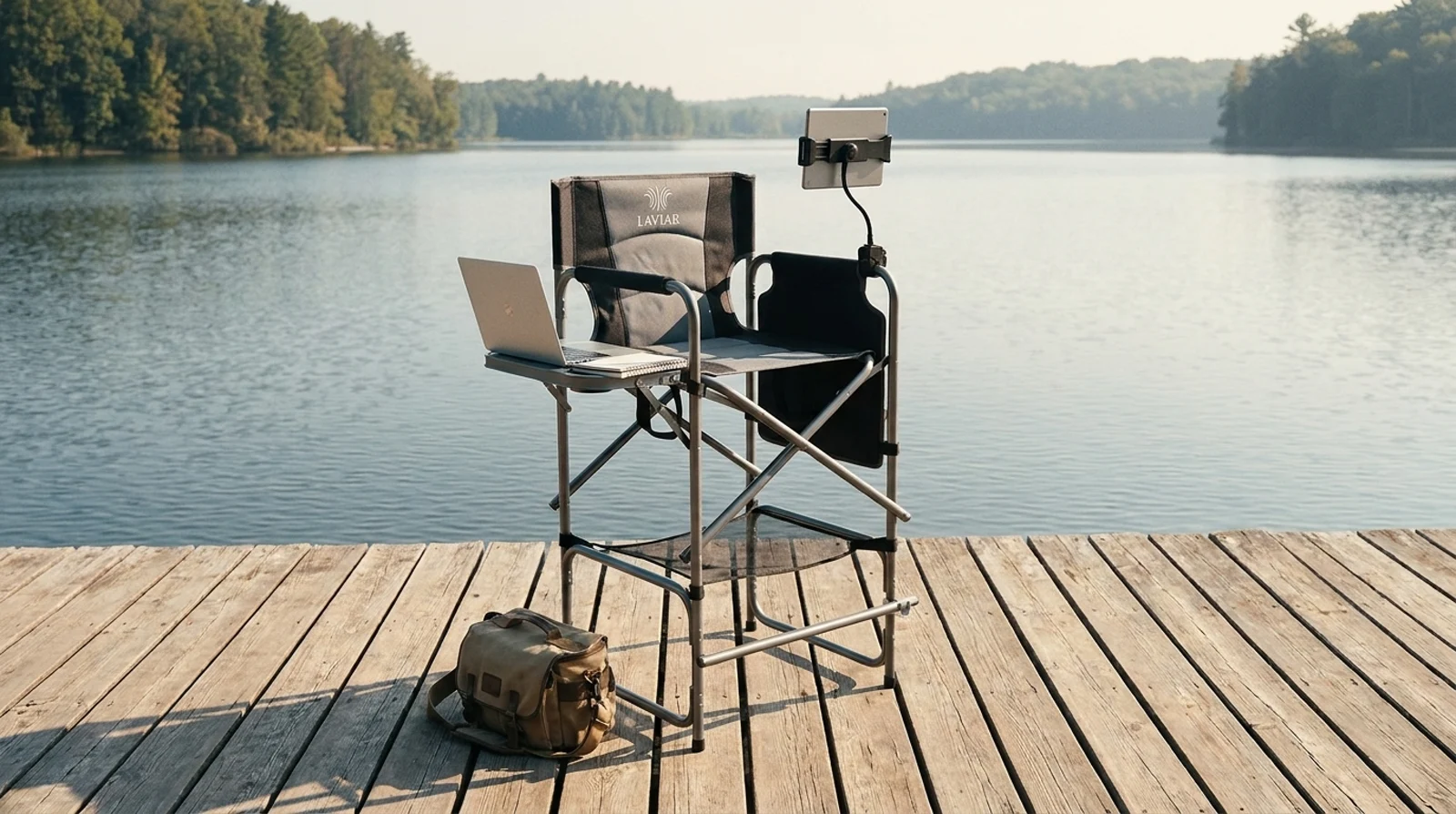
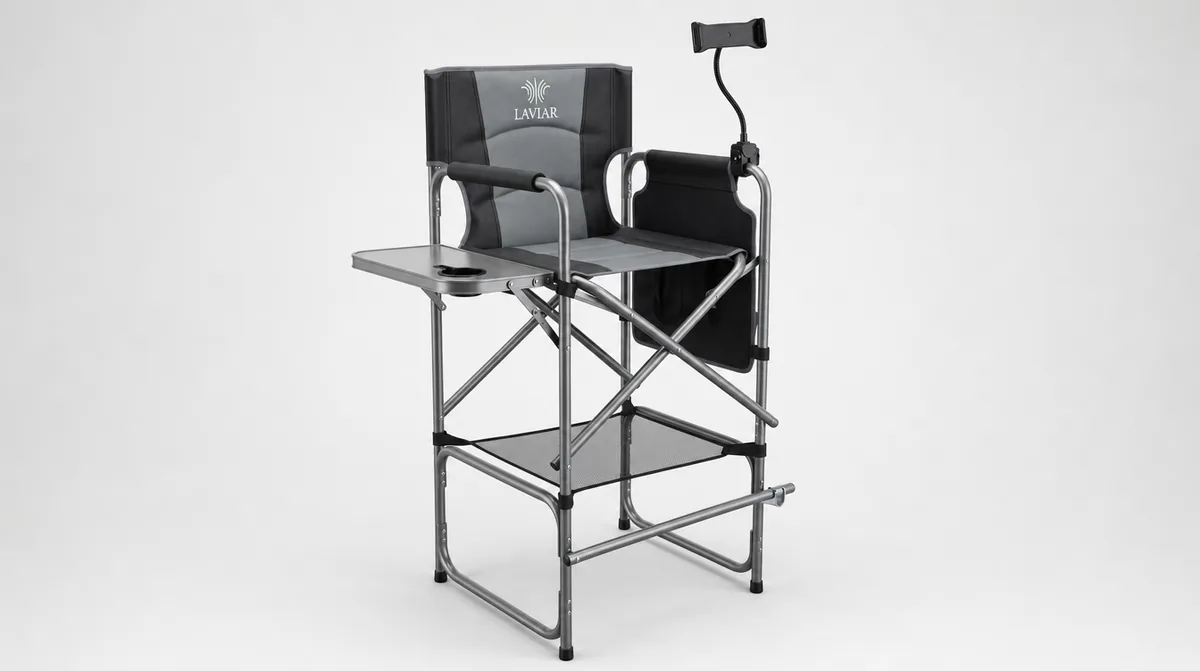
A quad chair is the folding bag chair everyone owns, four legs that collapse into a tube, with a fabric sling seat. That sling is the catch. The listed seat height is measured empty, and once you sit in it the fabric sags lower still, so a chair sold at 17 inches can put you at 14 or less with your weight in it. A director's chair uses a taut seat panel on a rigid frame, so the height on the box is roughly the height you sit at. Tall versions put that at about 30 inches, and LAVIAR's is 30.7 inches.
The numbers, in context
A dining chair is about 18 inches. A kitchen counter stool is 24 to 26. A quad camp chair sits you at 14 to 17, well below any seat you use indoors, which is exactly why standing up from one feels different from standing up at the dinner table. A tall director's chair at 30.7 inches lands above counter-stool height, so getting out of it is a forward slide with your feet already under you, not a push from the floor.
Bar stools run 29 to 32 inches, which is the closest everyday comparison. If you can get off a bar stool comfortably, you can get out of this chair comfortably, and the movement is the same one.
Why the knee cares so much
Rising from below knee height means the knee starts deeply bent and has to generate force from its weakest position, with the hip doing the same. That is the mechanical reason physical therapists commonly suggest seats at or above knee height for anyone with joint pain, and it is why "a chair I can actually get out of" is such a common request in camping and outdoor-gear communities. Nothing about a quad chair is unsafe. It just asks for a movement that gets harder with age, weight, a bad knee, or a replaced hip.
The sling makes it worse in a second way that has nothing to do with height. Because the fabric wraps around your hips, your knees end up higher than your hips, which rotates the pelvis backward and rounds the lower back. Standing from that position means unwinding the spine and the hips before the legs can do anything, which is why people rock forward twice to build momentum. A flat seat panel keeps hips level with or above the knees, so the standing movement starts from a neutral position.
Getting in, not just getting out
The high seat cuts both ways and it would be dishonest not to say so. Sitting down into a quad chair is a controlled drop, and most people do it without thinking. Sitting into a 30-inch chair is a step up and back, which is unfamiliar the first few times and asks for a hand on the armrest. After a day it stops registering, the same way a bar stool does. For anyone with balance concerns, that first-few-times caution is real, and the answer is the armrests rather than avoiding the height.
Comfort over three hours, not three minutes
A sling chair feels great for the first ten minutes because it wraps you. It feels worse at hour two, because the sling forces one posture and you cannot change it, and because the fabric that felt supportive has stretched. A flat panel feels firmer at first and stays the same at hour three, and it lets you sit upright, lean forward, or slouch back as you like. Which one you prefer at minute ten and which one you prefer at hour three are often different chairs.
The footrest bar is what makes the tall chair work for the long version. At 30 inches your feet do not reach the ground, and without a bar your thighs carry the weight of your legs against the seat edge. Any tall chair without a footrest is a chair for short sits, whatever else its spec sheet says.
Where the quad chair still wins
Honest answer: several places. It packs into a tube that stands in a trunk corner, it is lighter at roughly 7 to 10 lb against about 16 lb for a loaded tall chair, it costs less, and its low profile is better under a beach canopy or in a stadium row where a tall chair blocks the person behind you. If your seating problem is storage space or price rather than standing up, the quad chair is the right buy.
Two more cases go to the quad chair. Kids, who do not need the height and do need to get in and out unsupervised. And anything where the chair sits on soft sand, since a wide-footed low chair sinks more gracefully than a tall one on narrow tube feet.
Stability on ground that is not flat
Both styles want a firm, level surface, and both misbehave without one. The tall chair has a longer lever arm, so a leg dropping into a divot tilts you more than the same divot tilts a low chair. The fix is boring and effective: set the chair across a slope rather than facing down it, put a board or wide furniture pads under the legs on sand or loose dirt, and give the frame a quick push with your hand before you sit. The load-bearing side of that question, and why frame geometry matters more than the number on the box, is in the article on tested weight capacity.
What to check on a tall chair before you rely on it
Two things. First, the frame: look for a cross-braced steel-and-aluminum build with a capacity that says tested rather than claimed, since no US rule forces outdoor chairs through a load test. LAVIAR's is tested to 300 lb. Second, the footrest bar, which is not a luxury at this height. At 30 inches your feet do not reach the ground, and without somewhere to rest them a long sit gets uncomfortable. Getting in is a step rather than a drop, so put a hand on the armrest the first few times until the height stops feeling unfamiliar.
The armrests do more than you think
On a quad chair the armrests are usually fabric or thin plastic hung between the frame tubes, and they flex the moment you push on them. That is a problem, because pushing on an armrest is exactly what most people do to get out of a low seat, so the one thing you reach for is the one thing that gives. A director's chair uses rigid armrests fixed to the side frames, which means they take a real push without moving and give you something to control the descent with on the way in.
If you are buying for someone whose knees are the reason for the purchase, that detail is worth as much as the height. Test it in the obvious way: put a hand on the armrest and lean your weight into it. It should not deflect.
Which one to buy
If getting up is the problem you are trying to solve, the height is the fix and nothing else on either spec sheet matters as much. The wider case for that, including where a tall seat pays off beyond the standing question, is in the tall camping chair guide. If you sit behind other people at games, the sightline argument is in the sideline chair piece, and the campsite version is in the RV and overlanding write-up. LAVIAR's tall directors chair is $99.99 in Blue/Gray and Black/Gray, folds flat to about 16 lb with its carry bag, and has the side table, cup holder, gooseneck holder, footrest bar and storage pouch built in.
Frequently asked questions
Which is easier to stand up from, a director's chair or a quad camp chair?
A tall director's chair. Its seat is around 30 inches versus 14 to 17 on a quad chair, so you slide forward and stand instead of pushing up from below knee height.
Are tall chairs a good idea for older adults?
The higher seat is the point, since rising from a seat at or above knee height is easier on knees and hips. Because the seat is higher off the ground, use the armrests when sitting down and standing up, and pick a frame with a tested weight rating rather than a claimed one.
Is a tall director's chair heavier than a quad chair?
Yes. A basic quad chair runs about 7 to 10 lb. The LAVIAR tall directors chair is about 16 lb with its carry bag, and that includes the side table, cup holder, gooseneck holder and storage.
Does a quad chair's seat height change once you sit in it?
Yes. The sling fabric sags under load, so a chair listed at 17 inches empty can seat you at 14 or lower. A director's chair uses a taut panel on a rigid frame, so the listed height is close to the real one.