Why Vendors Sell More From a Tall Chair at Craft Shows
The advice booth veterans keep repeating
Go through craft-show threads on the LumberJocks woodworking forum, or Mallory Whitfield's vendor advice, or the booth write-ups on Girl in the Garage, and the seating note shows up again and again. Sitting in a low camp chair behind a six-foot table hides you. Shoppers see merchandise and an empty-looking booth, and they browse a competitor who is looking at them. The recommended fix is to sit high enough that you stay in the shopper's line of sight. This is vendor experience being passed down, not a measured study, and nobody has published a number on it. It is consistent enough across independent sources to be worth acting on.
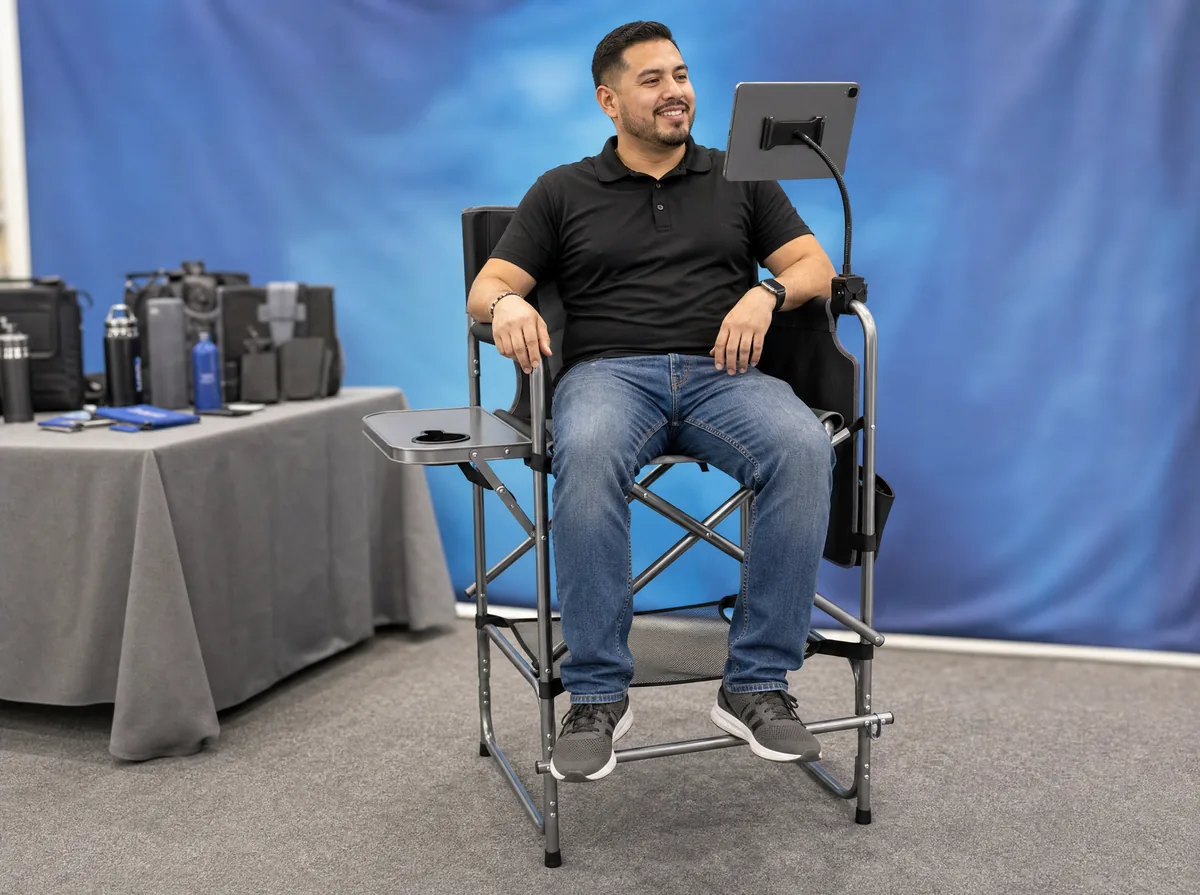
The geometry, since the argument is really about inches
A standard vendor or banquet table is 30 inches high. A quad camp chair seats you at 14 to 17, so your eyes land somewhere near 42 to 49 inches off the ground, which is at or barely above the table edge from where a shopper is standing. From five feet away, that reads as an empty booth with a head behind it. A 30.7-inch seat puts your eyes near 59 to 63 inches, which is inside the range where a standing adult's eyes are. You are a person at the booth rather than something behind the table.
That is the entire mechanism, and it is worth stating plainly because the advice usually arrives as folklore. It is not about confidence or energy. It is about whether the top of your head clears the merchandise.
Standing all day is not the alternative
The obvious answer to being hidden is to stand, and plenty of first-time vendors try it. A holiday market runs eight to ten hours, sometimes two or three days back to back, and by hour six standing has its own cost. A tall chair is the compromise: you are seated and resting, and your head is still where a walking shopper's eyes land. A footrest bar matters more here than anywhere else, because ten hours with your feet dangling at 30 inches is its own problem.
Work out the actual hours before deciding this is a small point. A three-day holiday market at nine hours a day is twenty-seven hours on your feet, and most vendors do several of those in a November. Anyone doing a full season is standing for the equivalent of a working month.
The booth chair spec
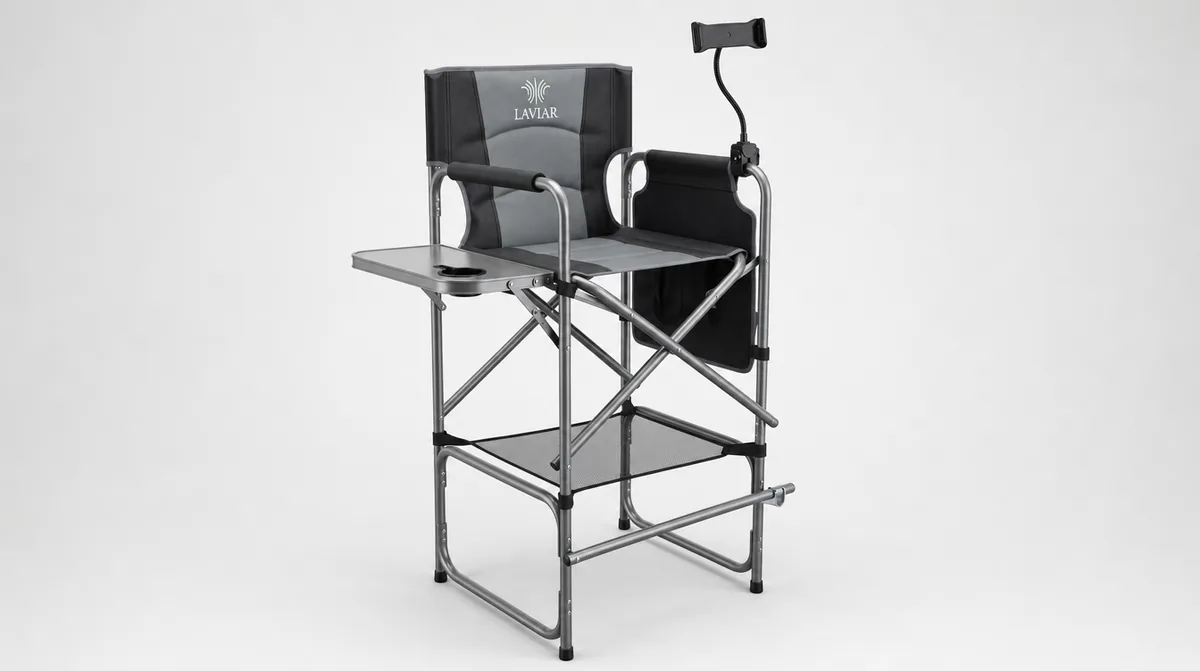
Height comes first. A 30.7-inch seat is counter height, which is where you want to be against a standard table. Then the surface: a fold-out side table with a recessed cup holder keeps your drink and your card reader off the merchandise, which is the sort of thing you only think about after a knocked-over coffee ruins inventory. A gooseneck holder takes the phone or tablet you run payments from. A rear organizer, an under-seat mesh shelf and a side pocket give tape, business cards and a bag somewhere to live that is not the ground. And it has to fold flat, because after the tent, the tables and the bins, a chair that packs like a book is the one that fits.
The card reader detail is worth a sentence of its own. A phone clamped in a gooseneck at chest height is visible to the customer and reachable by you without leaning across the table, which speeds up the part of the transaction where people change their minds. Mounting quality varies a lot between chairs that look the same in photos, and the side table buying notes cover what separates a rigid bracketed panel from a tray that sags.
Load-in is the other half of the job
Most shows give you a window and a long walk from a loading zone. Everything you own has to come in on a hand truck, and the shape of each item decides how many trips that takes. A chair that folds flat lies against the tent bag on the cart. A chair that folds into a tube rolls off it. At about 16 lb in a carry bag it is not the heavy item, it is just one that needs to stack rather than perch.
Where to put the chair
Behind the table dead center is the worst spot even at the right height, because the merchandise display is between you and the aisle. Put the chair at the end of the table, angled toward the aisle, so there is a clear line between you and someone walking past. That position also lets you stand up without shuffling sideways past your own stock, which you will do fifty times a day.
What the chair holds when it is not holding you
A booth generates a surprising amount of small stuff with nowhere to go: tape, scissors, a price gun, business cards, a lunch, a bag you do not want on the floor of a convention hall. On a tall chair with a rear organizer, an under-seat mesh shelf, and a side pocket, all of that lives on the chair instead of under the table where you have to crawl for it in front of a customer. That is a small thing that shows up forty times a day.
The chair also becomes storage during setup and teardown, which is the part of a show where nothing has a home yet. Open the chair first, put the till bag and the tape on it, then build the booth around it.
A note on shows that supply chairs
Some indoor markets and most convention centers provide a chair with the booth fee, and it is always the same folding banquet chair at about 18 inches. If your show list is mostly those, work out whether you are carrying a chair to duplicate something you already get. The answer for a lot of vendors is still yes, because an 18-inch chair puts you back below the table line and that is the exact problem you were solving. Worth checking the show packet rather than assuming either way.
One caveat on the eye-level claim
If your display is tall, a shelving unit or a grid wall at the front of the booth, no chair puts you above it. The eye-level argument is about the open aisle side of the booth, where shoppers actually pass and glance in. Set the chair where the sightline is open, usually at the corner of the table rather than dead center behind it.
The other caveat is honesty about the evidence. Nobody has run a controlled test on booth seating and sales, so treat this as accumulated vendor experience rather than a measured effect. It is cheap to act on and consistent across independent sources, which is a reasonable basis for a $99.99 decision and not for a claim about a percentage lift.
The rest of the year
A chair bought for markets does not sit idle between shows. The same tall directors chair goes to a campsite, a sideline, or a photo shoot, which is a reasonable way to think about $99.99 for a frame tested to 300 lb that folds to about 16 lb with its carry bag.
Vendors who also do beauty work get the most out of that overlap, and the seating requirements on that side are covered in the piece on tall directors chairs for makeup artists and the mobile artist chair checklist. If the frame spec is what you care about, the wording on capacity claims is explained in the weight capacity article.
Frequently asked questions
What height chair should a craft show vendor use?
Around 28 to 31 inches of seat height keeps you near a standing shopper's eye level over a standard table. The LAVIAR tall directors chair is 30.7 inches.
Does sitting down at a booth hurt sales?
Craft-show vendor advice consistently says sitting low behind a table reduces engagement because shoppers cannot see you or make eye contact. Sitting at a height that keeps you in the sightline is the usual recommendation. No published measurement exists, so treat it as experienced vendor advice.
Does a tall director's chair fold small enough for a booth load-out?
It folds flat rather than into a tube, which stacks well against tent bags and tables. The LAVIAR packs into an included carry bag at roughly 16 lb.
Where should the chair go in the booth?
At the end of the table angled toward the aisle, not dead center behind the display. That keeps a clear line between you and passing shoppers and lets you stand without squeezing past your own stock.